A threshold is a condition, not just a decision
The book separates wanting change from having enough internal and external support to cross. That distinction reduces the temptation to explain every delay as lack of character.
 TRIUNESHELFBOOKS BY ULYSESS ORTIZ
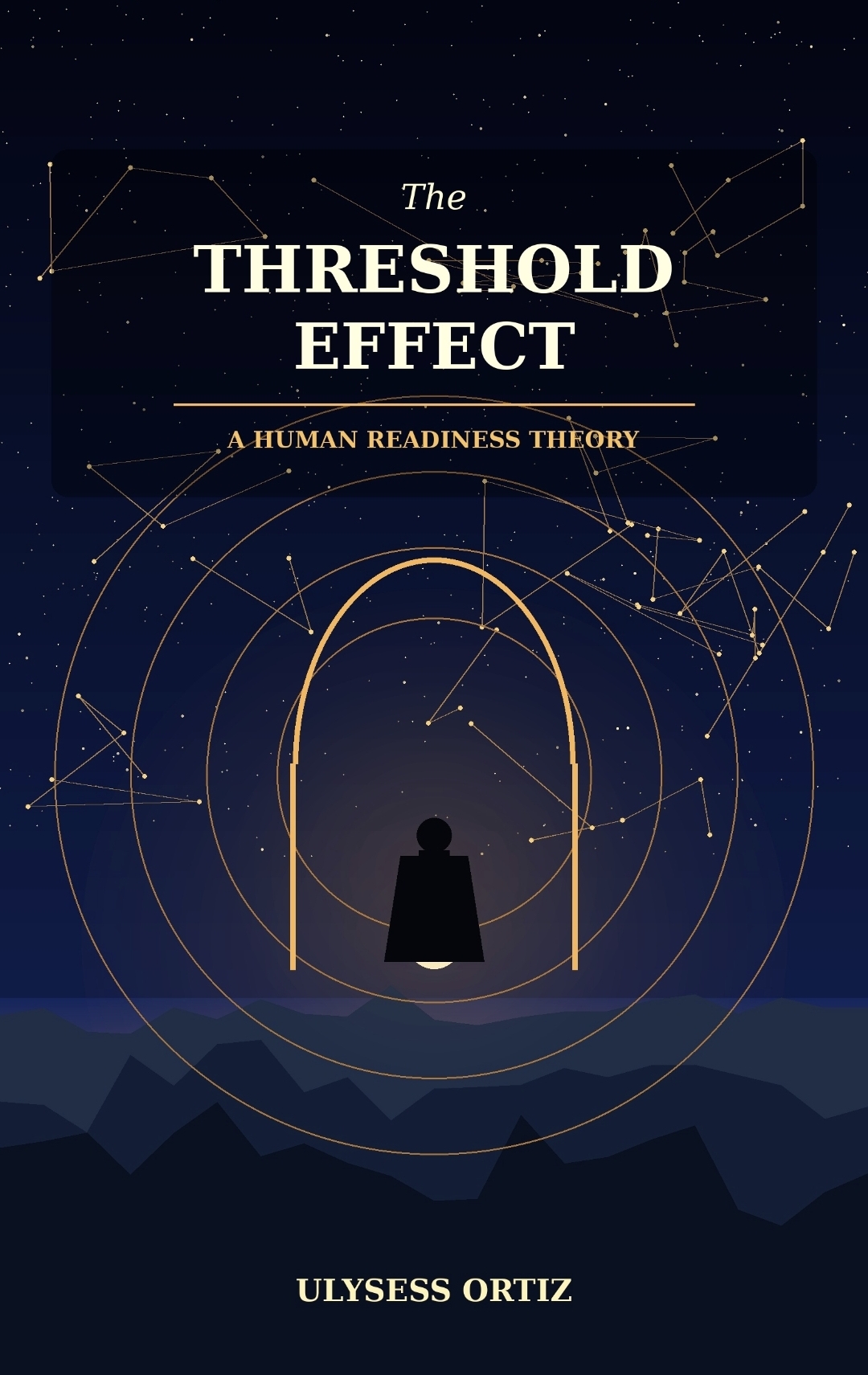 The Threshold Effect
II · BECOMING · English
A Human Readiness Theory
The Threshold Effect is a human-readiness theory built around one question: what conditions allow a person to cross? Its readiness map names the threshold, identifies the guardian, gathers missing conditions, designs the smallest door, uses witness when needed, collects evidence, and returns with dignity.
A HUMAN READINESS THEORY
The Threshold Effect starts from an everyday paradox: people often know what they should do long before they are actually able to do it. Advice can be correct and still arrive before the nervous system, environment, meaning, belonging, or capacity is ready to support the crossing.
Instead of asking “What is wrong with this person?”, the book asks what conditions make movement possible. Its chapters move through ideas such as The Door That Does Not Open for Force, Readiness Is Not Laziness, Safety Before Crossing, Meaning as Doorway, Witness and Mirror, Sacred Friction, The Smallest Door, and Returning With Evidence.
The book separates wanting change from having enough internal and external support to cross. That distinction reduces the temptation to explain every delay as lack of character.
Safety, meaning, witness, capacity, and belonging can alter whether the same action feels possible. The theory looks beneath behavior rather than only commanding more effort.
One of the practical implications is that the right crossing may be smaller than the idealized version. A tiny viable action can matter more than a heroic plan that the person cannot inhabit.
The book considers how being seen accurately can change readiness. A witness can help a person recognize a door that shame or isolation kept invisible.
After movement, evidence matters. The reader is invited to notice what the crossing proves about capacity so the next threshold does not begin from zero.
What if the problem is not that you refuse to change, but that the conditions for crossing have not been built yet?
CHOOSE THIS IF
MAYBE NOT THIS ONE IF
Reflective human-development theory, not a clinical diagnostic or treatment model.
SHARE
This page has its own link and preview.
BACK TO THE SHOWROOM
This page ends with this title. No other book is mixed into this decision.
See all 30 books →