Reflective nonfiction built like a house
Readers are invited to move through rooms slowly rather than treat the book like a test. The manuscript explicitly says every tool does not have to be completed.
 TRIUNESHELFBOOKS BY ULYSESS ORTIZ
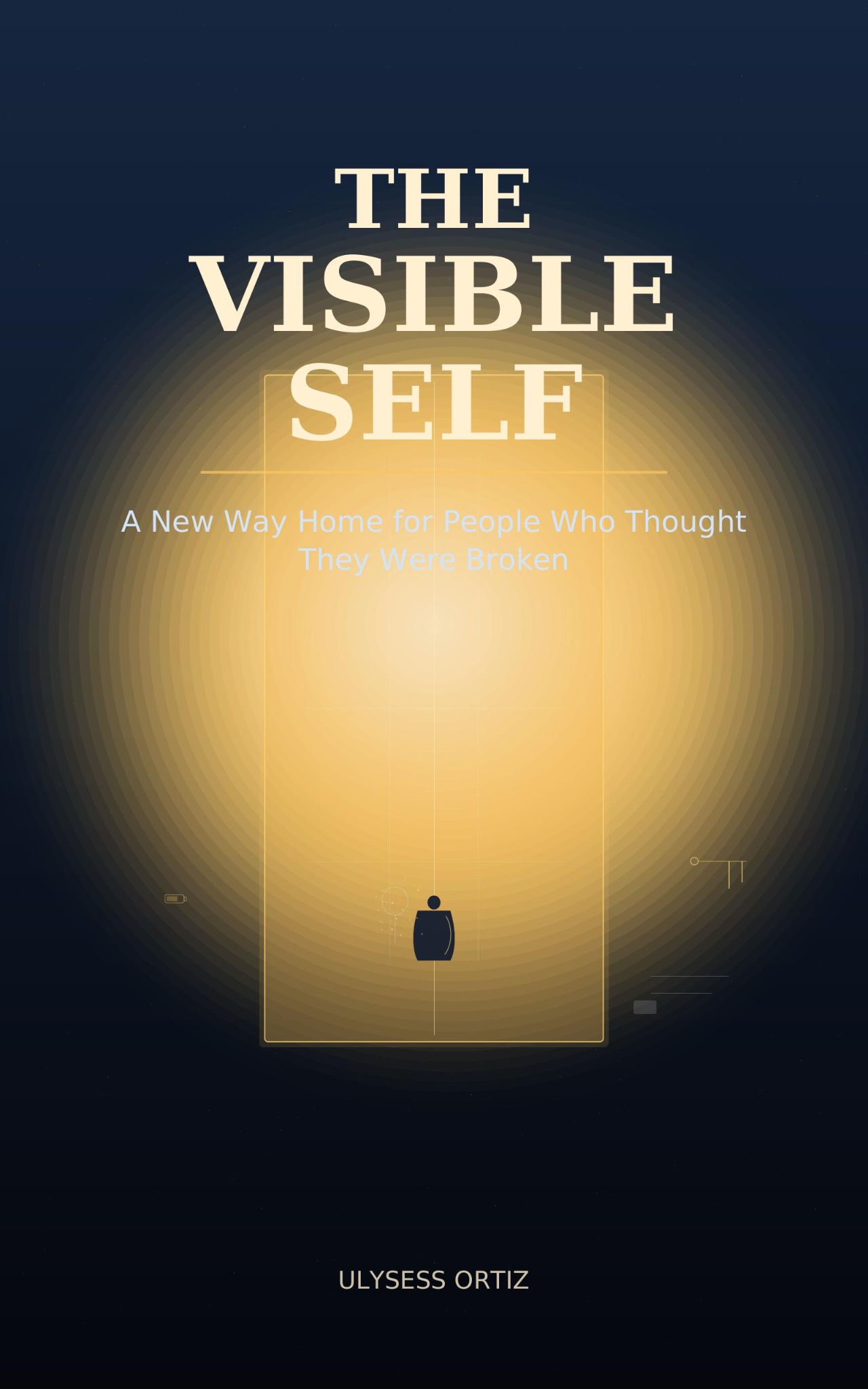 The Visible Self
II · BECOMING · English
A New Way Home for People Who Thought They Were Broken
A reflective nonfiction book built like a house for readers who have felt misread, masked, exhausted, or reduced to the wrong label. Its rooms explore visibility, the body, energy, translation, relationships, work, grief, anger, relief, support, and the question: what if my life was not broken, but misread?
THE VISIBLE SELF · BOOK ONE
The Visible Self identifies itself as reflective nonfiction, not a story-driven novel and not a diagnostic manual. Its opening note says directly that it does not diagnose the reader. Instead, it offers a recognition journey for noticing patterns, reducing shame, understanding needs, and preparing for better support when support is available.
The manuscript is built like a house. Its rooms include the Mask Theater, Body Observatory, Battery Vault, Translation Desk, Design Workshop, Joy Garden, Relationship Room, Work and Survival Room, Grief Room, Anger Room, Relief Room, and Support Room. Autism is part of the recognition lens alongside experiences that can overlap with depression, anxiety, trauma, ADHD, OCD, grief, stress, and other conditions. The book’s question is not “What is wrong with me?” but: what if my life was not broken, but misread?
Readers are invited to move through rooms slowly rather than treat the book like a test. The manuscript explicitly says every tool does not have to be completed.
The opening part names the Person Under the Wrong Label, When Depression Was Real, But Not the Whole Story, the Invisibility Injury, and the Witness Need.
The middle architecture examines what it costs to survive while being misread and how a person may need different language for their body, energy, environment, and interests.
The later rooms bring recognition into ordinary life and the places where visibility can be hardest to practice.
The book repeatedly distinguishes self-understanding from medical or psychological diagnosis and directs readers toward qualified support when it is needed.
What if the life you kept calling broken was also a life that had been repeatedly misread?
CHOOSE THIS IF
MAYBE NOT THIS ONE IF
Reflective nonfiction about identity, masking, exhaustion, grief, anger, and support. It is not diagnostic or medical advice.
SHARE
This page has its own link and preview.
BACK TO THE SHOWROOM
This page ends with this title. No other book is mixed into this decision.
See all 30 books →