Forty Desk Entries, one correspondence growing teeth
The episodic structure lets each new object widen the same mystery. You are not jumping between unrelated cases; you are watching a pattern teach the Desk how it works.
 TRIUNESHELFBOOKS BY ULYSESS ORTIZ
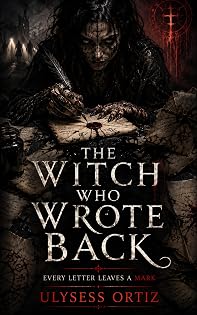 The Witch Who Wrote Back
III · SHADOW · English
Every letter leaves a mark.
The first letter arrives at the Night Desk without envelope, stamp, or sender and answers a question nobody remembers asking. Across forty Desk Entries, changing records, impossible correspondence, and seven women erased from town history reveal the rule: writing is an invitation.
THE NIGHT DESK CORRESPONDENCE
The Witch Who Wrote Back begins at the Night Desk with a letter that arrives without envelope, stamp, return address, or any route through a living post office. It is warm enough to leave heat in the wood. Worse, it answers a question no one remembers asking. The first rule emerges immediately: writing is an invitation.
Across forty Desk Entries, the correspondence spreads through forms that should be inert. A church record changes after it is photographed. A diary page answers its reader. A dead child writes. A family Bible gains a name. A burned letter continues in ash. Seven women erased from town records begin to reappear in margins, recipes, notices, and handwriting. The horror is cumulative: every document adds evidence that the past is not finished being written.
The episodic structure lets each new object widen the same mystery. You are not jumping between unrelated cases; you are watching a pattern teach the Desk how it works.
The book weaponizes ordinary documents. Each format carries a different kind of authority, which makes it worse when the page starts changing after people have already trusted it.
The supernatural threat is tied to names, authorship, memory, and what institutions chose not to preserve. The investigation becomes partly about who was denied the right to remain legible.
Reading is not passive here. Answering, copying, photographing, filing, or preserving a document can become a form of participation.
The dread comes from correspondence, evidence, and ritual logic. The book rewards readers who enjoy watching rules assemble one disturbing piece at a time.
What happens when the people erased from history discover that paper can still give them a way back?
CHOOSE THIS IF
MAYBE NOT THIS ONE IF
Adult horror with death, supernatural threat, erased histories, disturbing documents, and occult/ritual imagery.
SHARE
This page has its own link and preview.
BACK TO THE SHOWROOM
This page ends with this title. No other book is mixed into this decision.
See all 30 books →